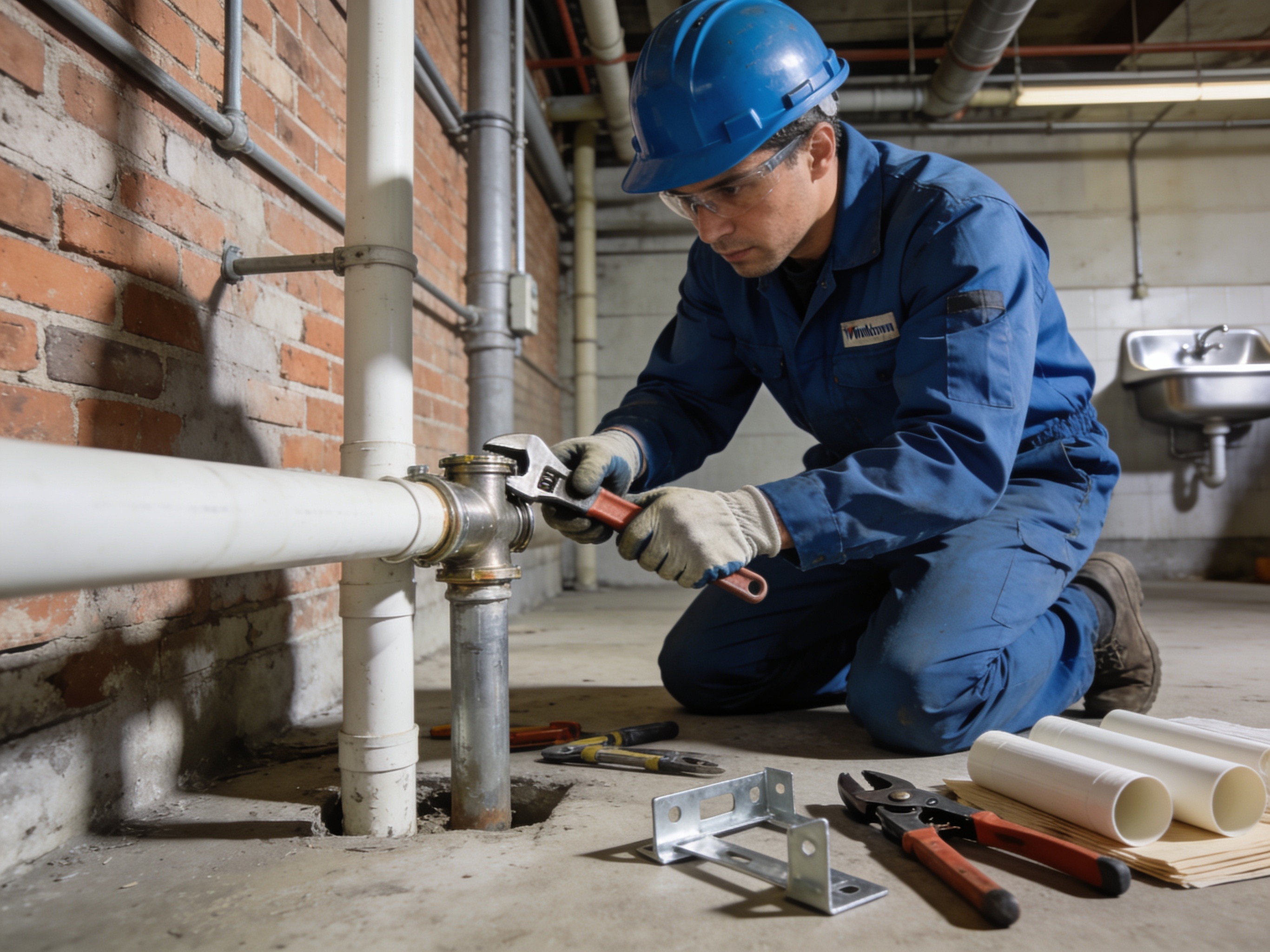
Wilmington's housing stock near the Port of Los Angeles often dates to the 1940s through 1960s, with many homes in the Banning Park area still carrying galvanized steel lines that corrode from saline soil and occasional moisture. Replacing these requires careful excavation to avoid disturbing shallow foundations common in the flat terrain. Copper or PEX retrofits must meet current Los Angeles County plumbing codes, including proper dielectric unions to prevent galvanic reaction when tying into existing lines.
Dry summers typical of the mild Mediterranean climate here can mask slow leaks until they surface near Wilmington Waterfront Park or along Avalon Boulevard corridors. Technicians check for root intrusion from mature trees in residential yards and account for the higher water table close to the port when planning trenching. Materials are chosen for corrosion resistance rather than standard residential specs used farther inland in Carson or Long Beach.
Edge cases include multi-unit buildings downtown where shared risers run through narrow utility easements and require coordination with neighboring properties. Pressure testing after installation uses county-mandated methods to verify no cross-connections, especially important in areas with older cast-iron sewer laterals that may need separate repair before new supply lines are tied in.
Technician insight
In Wilmington the thing that catches most people out with Pipe Installation and Repair is the saline soil near the Port of Los Angeles eating through galvanized lines faster than in Carson or Long Beach; many Banning Park homes also have shallow crawl spaces that force awkward reroutes instead of straight runs.
Banning Park galvanized line failure
Homeowner noticed low pressure and discolored water after a dry summer. Inspection found multiple pinhole leaks in 1950s galvanized supply under the house near Banning Park. Crew replaced the main run with PEX, tied into the meter with dielectric fittings, and restored the crawl space access points.
Pipe Installation and Repair Services We Offer
✓Copper Pipe Installation
Full or partial copper repiping for older Wilmington homes where galvanized lines have failed due to port-area soil conditions.
✓PEX Repiping
Flexible PEX tubing retrofit that minimizes wall demolition in Banning Park neighborhood homes with tight crawl spaces.
✓Sewer Line Repair
Trenchless or traditional repair of clay and cast-iron laterals common near the Port of Los Angeles where root intrusion is frequent.
✓Water Main Replacement
Replacement of aging service lines from the meter to the house foundation in Downtown Wilmington properties.
✓Slab Leak Detection and Repair
Detection and rerouting or epoxy repair of supply lines under concrete slabs typical in post-war Wilmington construction.
Pipe Installation and Repair Cost in Wilmington, CA
| Service | Typical Range | What Affects It |
|---|---|---|
| Copper pipe section repair | $250–$650 | Varies with depth and whether wall or slab access is required |
| PEX repipe of main bath | $1,800–$3,200 | Depends on number of fixtures and whether drywall must be opened |
| Sewer lateral spot repair | $900–$2,400 | Affected by root intrusion level and trenchless vs open trench method |
| Water main replacement | $1,400–$2,900 | Changes with distance from meter and sidewalk or driveway cutting needs |
Ranges are typical for Wilmington, CA and confirmed with an exact written quote before any work starts.
How it works
- 1
On-Site Assessment
Technician inspects visible piping, checks water pressure, and maps access points considering Wilmington's shallow foundations and utility easements.
- 2
Material And Route Planning
Selects copper or PEX based on soil corrosivity near the port and plans routes that avoid mature tree roots common in the Banning Park area.
- 3
Installation And Connection
Removes old lines, installs new piping with proper supports and dielectric fittings, then ties into existing fixtures while maintaining water service where possible.
- 4
Pressure Testing And Cleanup
Performs county-required pressure test, restores excavation sites, and verifies no leaks before leaving the property.
Pricing
Upfront quotes after inspection; final price depends on access difficulty, material choice, and length of run.